|
解説
|
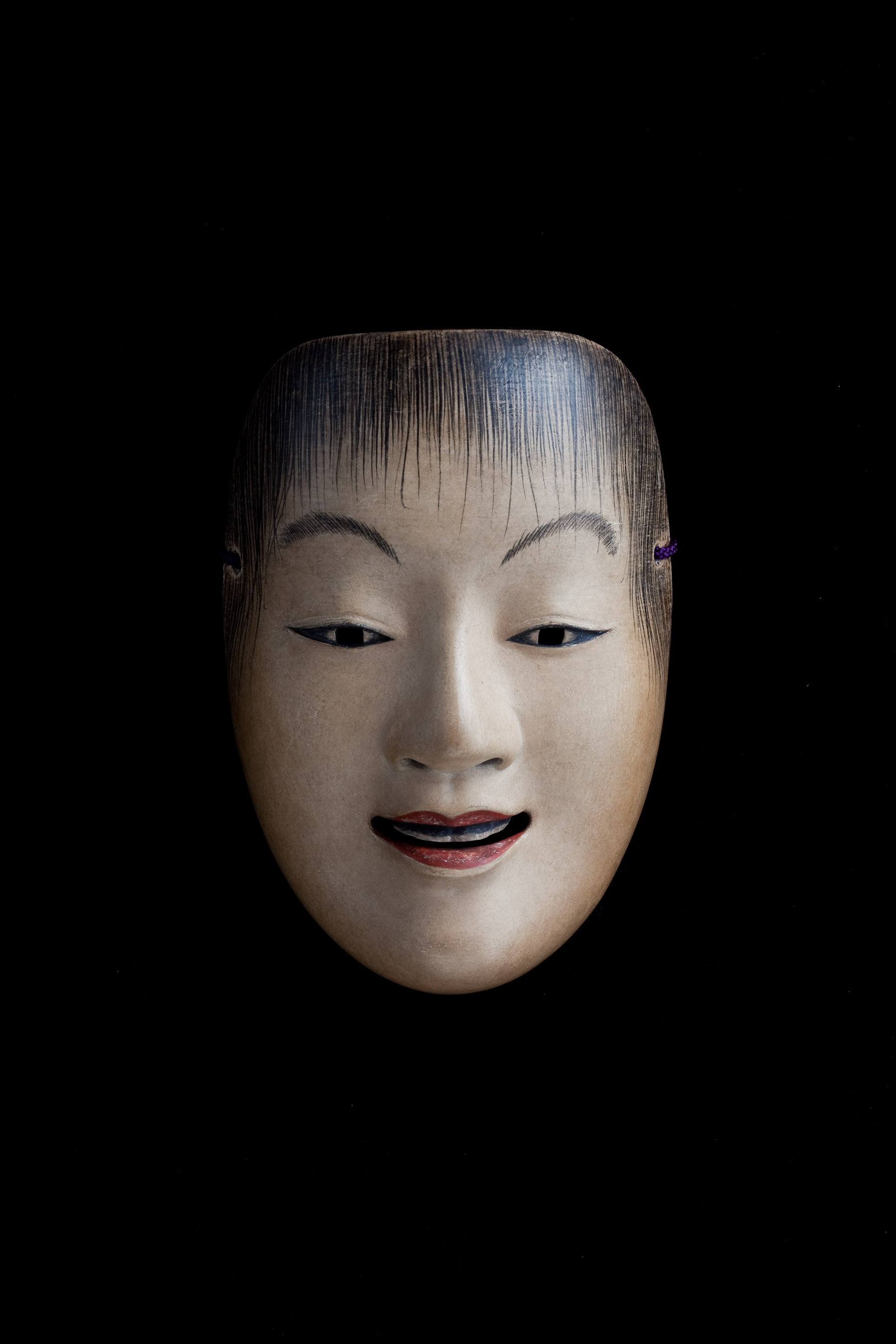
A mask representing a young boy with the fairy-like quality of eternal youth. The smooth oval face, arched eyebrows, and lack of lower teeth all contribute to an overall impression of gentle good-naturedness. Dōji is very similar in form to the mask jidō, being distinguished primarily by a somewhat narrower breadth, more arched eyebrows, and lack of dimples on the cheeks. Traditionally used by all schools but Kanze (which uses Jidō) in such plays as Makura-jidō and Kiku-jidō, where the main character celebrates an auspicious imperial reign by presenting water from the Fountain of Youth to the emperor's messenger. Other uses for dōji include the first acts of "Iwafune", "Tamura", "Kokaji", and other plays where the innocent features conceal a benign supernatural agent. The Kongō school model mask (honmen), now owned by the Mitsuii family, is a fine Momoyama period example with an inscription by the 17th-century carver Deme Genkyū, attributing it (probably erroneously) to the 15th-century carver Chigusa. The expert copier Deme Yūkan Mitsuyasu (d. 1652) also made fine examples. Variations include dōji with a black rim across the forehead instead of thin bangs, called kanmurigata dōji. In addition, for such plays as Ōeyama where dōji later turns out to be a demon, a more rakish mask, shitadashi dōji, is used. It has a small forehead, high cheekbones, and a leering smile exposing a bit of the tongue. [MB]
|
 小画像頁表示へ