|
Commentary
|
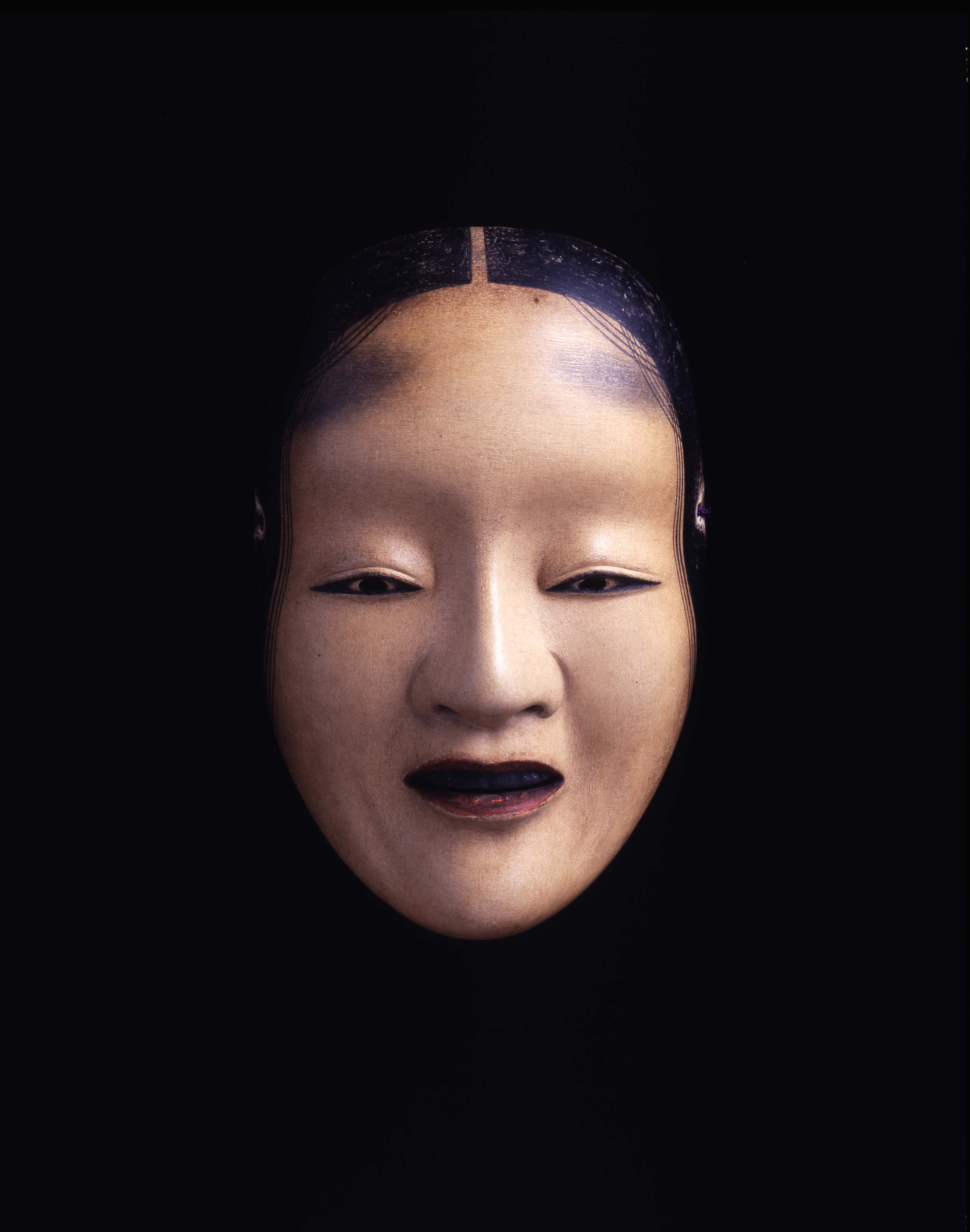
A mask representing a middle-aged woman torn by separation from a loved one, either man or child. Compared to the other main middle-aged woman's mask, fukai, the expression of shakumi is more tearful, her anxiety greater. This is most evident in the downcast eyes with heavy double-fold eyelids and curved eyeballs. Thick lips and muscle dents in the lower cheeks heighten the sense of age and suffering. The hairline, with loose strands emerging only somewhat distanced from the part, distinguishes this mask.The mask type was created by Tatsuemon (see jissaku), and a fine example with his inscription remains with the Kongō family in Kyoto. Shakumi is the standard mask for roles of mothers who have lost their child in plays like Sumidagawa (Sumida River) or Hyakuman, or wives separated from their husbands in plays like Kinuta (The Fulling Block), used by the Kongō, Komparu, and Kita schools, though Kanze and Hōshō schools may use it as an alternative to fukai. Variations: the Hōshō school shiro shakumi (white), and the Komparu school waka shakumi (young) and fuka shakumi (old).[MB]
|