|
Commentary
|
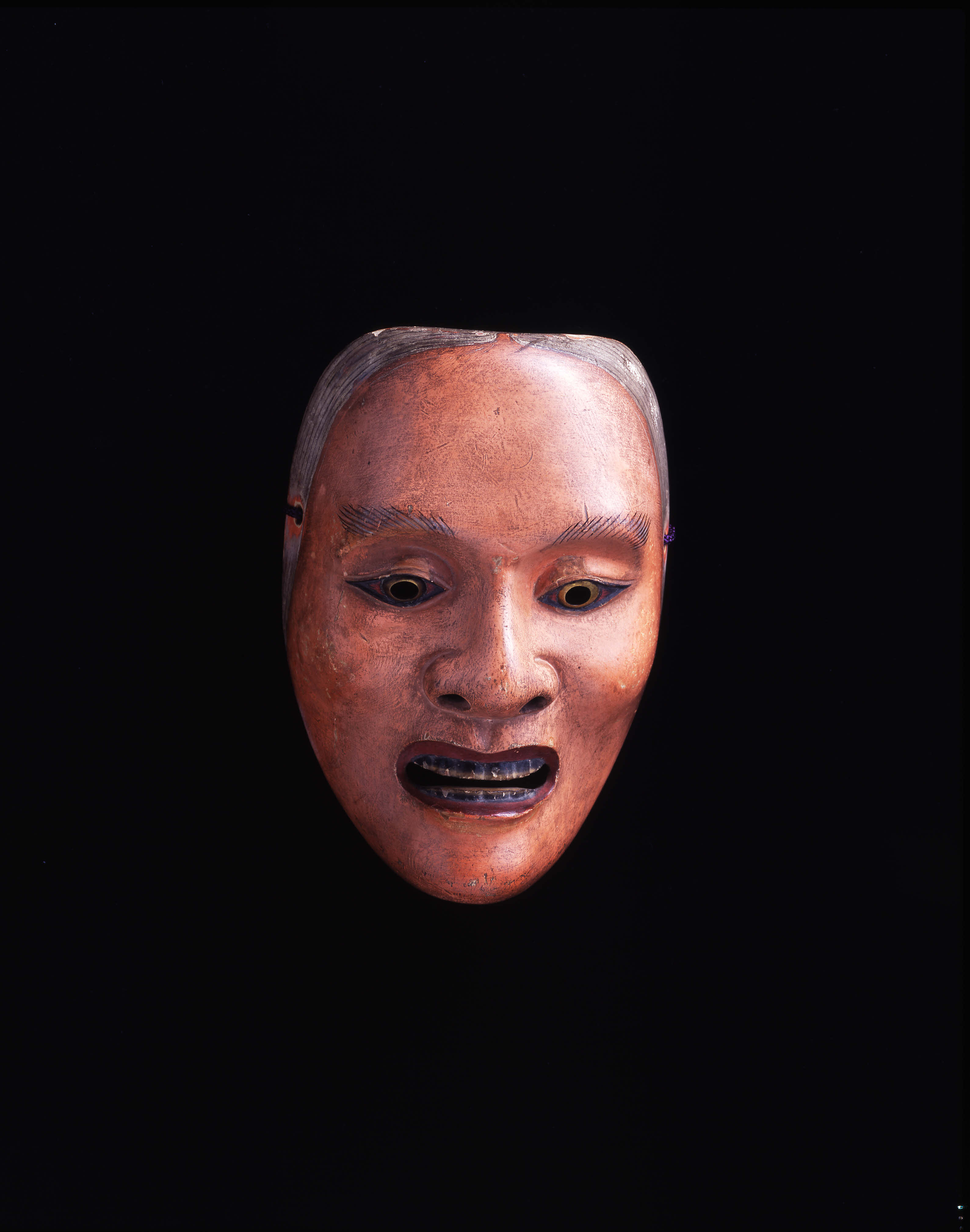
A mask used in the play Yamanba and representing an old woman, half demon, who roams the mountains. The enigmatic personality of Yamanba is apparent in the wide variety of masks used to represent the role. The gaunt features, wrinkled brow and pale coloring of the Hōshō school mask, attributed to the 15th century carver Tatsuemon, presents a realistic portrayal of an old woman wise to suffering and very human. The ruddy, weather-beaten yamanba mask in the Mitsui Archives and attributed to the 15th century carver Tokuwaka has a balance of power, wisdom and sensitivity in its strong, muscular cheeks, flashing eyes and fleshy lips. The Kanze school mask is a more elfin version of the Mitsui mask, with lighter coloring, more delicate features, but the same open energy and slightly bared teeth. The Kongō school owns a mask attributed to the 15th century carver Shakuzuru that appears demonic with bright vermilion flesh, and close-knit eyebrows hovering over protruding round eyes, yet has abstractly rendered wrinkles lining the cheeks and forehead to suggest old age. Finally the Umewaka branch of the Kanze school owns a yamanba that emphasizes the demonic aspects of the role, being modeled on the serpent mask ja, with a gaping, leering mouth dominating the lower half, a pointed nose, and large ears. Despite these wide variances, all the yamanba masks share having small, round metallic irises indicating demonic nature, and all but the Umewaka mask share the representation of hair and eyebrows with alternating lines of white and black, typifying and old woman. [MB]
|