|
Commentary
|
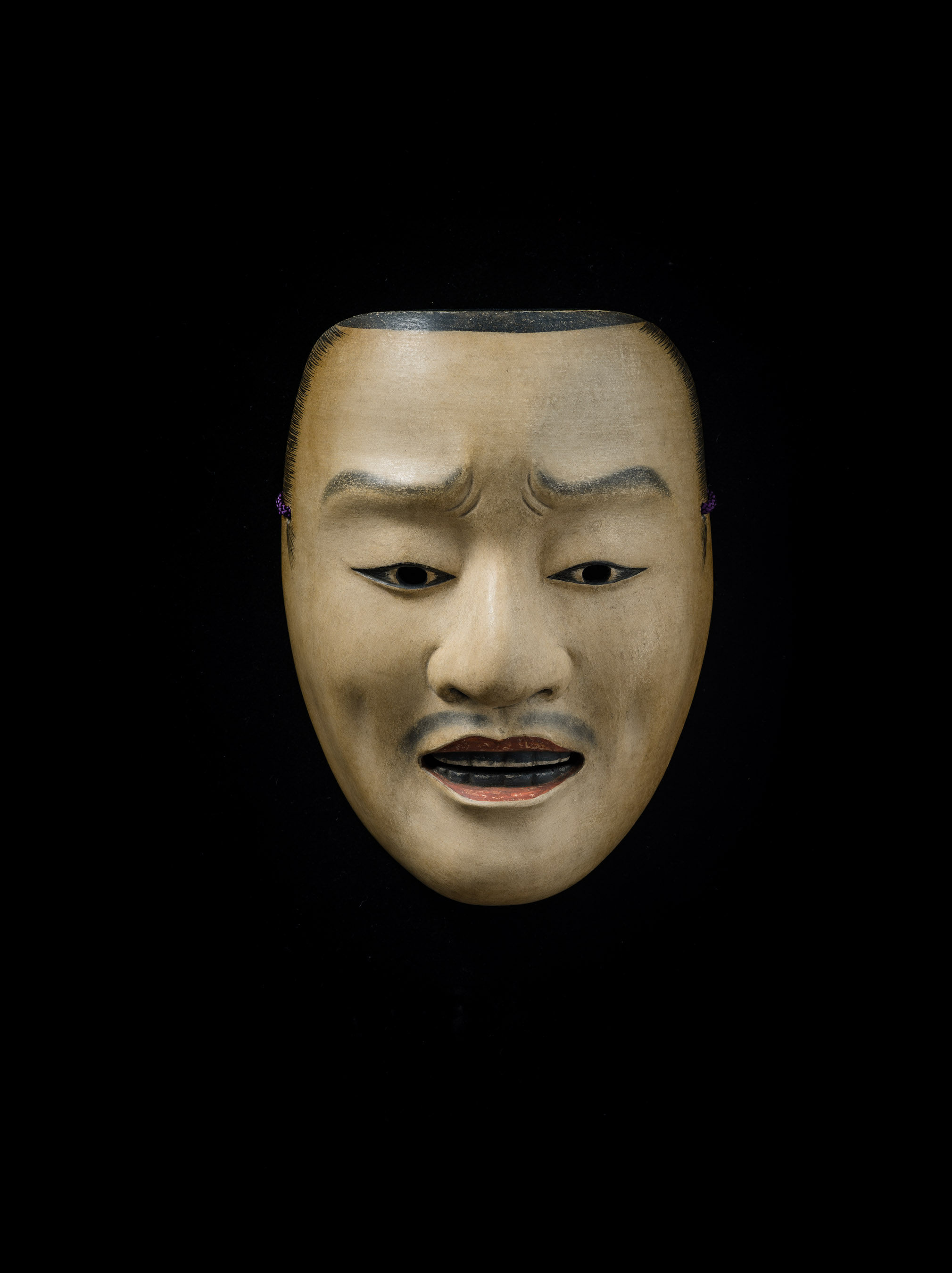
A mask originally made for the role of Rosei in the play Kantan.Travelling in search of enlightenment, Rosei naps at an inn, where he rests his head on the pillow of kantan and sees himself in a dream as great and powerful. On awaking, he realizes it was only a vision, and reconciled to his life, returns to his native village.The mask is modeled so subtle movement evokes expressions both of his melancholy skepticism and enlightened clarity. Furrows line the tensed eyebrows and rounded eyes look down, but the cheeks are full and muscular, and the mouth has a hint of a smile exposing two rows of half-blackened teeth. The small black mustache and eyebrows line the ridges formed by the lips and bone structure. Compared with the delicate features of masks for noblemen, like chūjō and atsumori, kantan otoko has the strength of a commoner. It is this strength, and clarity of expression when the lines of trouble above the eyes are covered by headgear, that inspired the use of this mask since the Momoyama period for roles of vigorous gods such as Sumiyoshi Myōjin in the play Takasago. It can also be used for the commoners in Ominaeshi and Utaura.The mask type is said to have been created by the 15th century carver Tokuwaka. [MB]
|
 thumbnail list view